

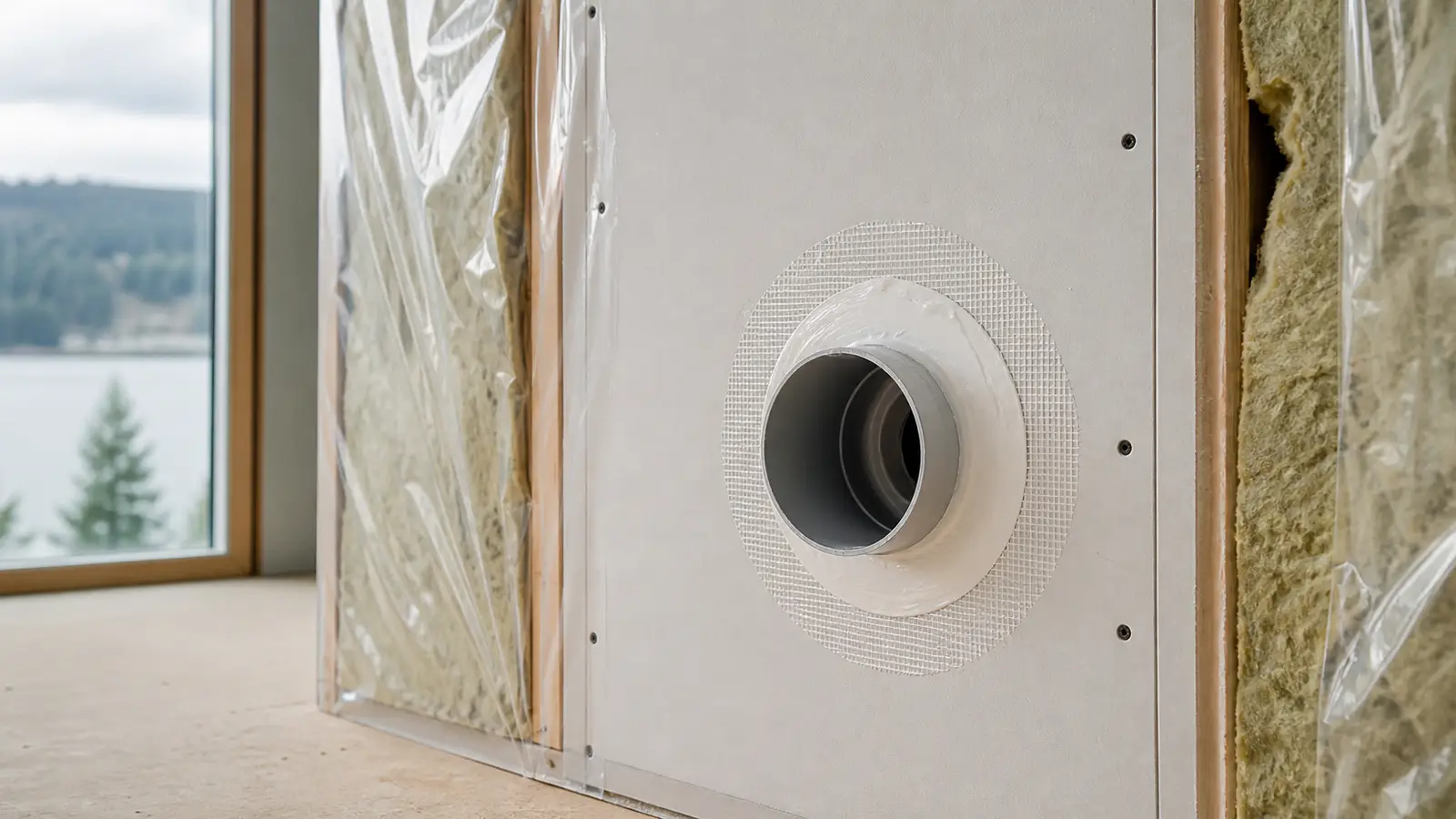
In Western Washington's damp Marine Climate Zone 4C, the Washington State Energy Code (WSEC Table R402.1) and IRC Section R702.7 mandate controlled vapor retarders on the warm-in-winter interior side of exterior wall assemblies. Installing outdated 6-mil plastic polyethylene sheeting behind interior drywall creates a high-risk "double vapor barrier" that traps summer moisture and causes hidden wall cavity mold. Modern building science replaces sheet poly with Class II vapor-retarding primer-surfacers (0.1 to 1.0 perm rating) applied directly over interior gypsum board. This controls outward winter moisture drive while allowing wall cavities to safely dry inward during summer months. In 2026, professional vapor-retarding primer applications in the South Sound cost $0.45 to $0.85 per square foot.
The Pacific Northwest Vapor Dilemma: Marine Climate Zone 4C
Western Washington's climate is unique: we experience long, wet, cool winters (40°F to 50°F with 85% to 95% outdoor relative humidity) followed by warm, dry summer months.
Inside a modern home in Lacey or Olympia, everyday living—cooking, hot showers, breathing, and laundry—generates 2 to 4 gallons of water vapor daily.
During winter, heated indoor air pushes this moisture outward through interior drywall toward cold exterior plywood sheathing (moisture drive). If warm vapor touches cold exterior sheathing, it condenses into liquid water inside the insulated wall cavity, rotting wood studs and growing toxic mold.
Understanding how to control interior vapor drive without trapping summer condensation is one of the most critical aspects of modern Pacific Northwest building science.
Perm Ratings: Understanding Vapor Retarder Classifications
Building codes (IRC Section R702.7) classify building materials by their water vapor permeance (Perm Rating)—a measure of how much water vapor passes through a material under vapor pressure:
| Vapor Retarder Class | Perm Rating Range | Material Examples | Recommended Use in PNW Climate |
|---|---|---|---|
| Class I (Vapor Impermeable) | < 0.1 Perm | 6-mil Polyethylene Sheeting, Unperforated Foil | High Risk: Traps moisture in summer; causes mold in air-conditioned homes. |
| Class II (Vapor Semi-Impermeable) | 0.1 to 1.0 Perm | Vapor-Retarding Drywall Primer-Surfacer, Kraft Paper Facing | Recommended Standard: Controls winter moisture drive; allows controlled drying. |
| Class III (Vapor Semi-Permeable) | 1.0 to 10 Perm | Standard Latex Primer, 1/2" Gypsum Board | Suitable where continuous exterior rigid foam insulation is installed. |
| Vapor Permeable | > 10 Perm | Unpainted Drywall, Housewrap | High vapor transmission; requires interior vapor control layer. |
Why Sheet Polyethylene (6-Mil Plastic) Fails in Modern Homes
For decades, Washington builders stapled clear 6-mil plastic sheeting across interior studs before hanging drywall.
While effective at blocking outward winter vapor drive, sheet plastic creates serious structural problems:
- The Double Vapor Barrier Trap: When builders install continuous exterior rigid foam insulation or modern self-adhering exterior weather-resistive barriers, adding interior poly creates two impermeable barriers. Any moisture that enters the wall cavity (from a minor window leak or roof draft) is permanently trapped between the two plastic layers, rotting the timber studs.
- Inward Summer Moisture Inversion: During warm summer months, solar radiation heats damp exterior siding, driving moisture inward toward the air-conditioned interior. Sheet poly blocks this inward drying, causing condensation to pool directly on the back of the drywall.
- The Modern Solution: Replacing sheet poly with Class II vapor-retarding primer-surfacers applied directly over finished drywall creates a "smart" vapor control layer that blocks winter vapor drive while permitting gradual inward drying.
The Solis 4-Stage Vapor Control & Drywall Protocol
At Solis Interiors, our high-performance moisture control workflow ensures energy compliance and structural longevity:
- Air Barrier Perimeter Sealing: Before hanging drywall, we verify that exterior wall bottom plates, top plates, and window rough openings are gasketed with commercial elastomeric acoustic sealants to prevent convective air leakage.
- ASTM C1396 Board Installation: We install 1/2" or 5/8" gypsum panels hung horizontally with tight, laser-aligned joints.
- Monolithic GA-214 Level 4/5 Finishing: We tape and finish all joints using low-shrinkage chemical hot mud, applying a monolithic Level 4 or Level 5 surface across all exterior wall planes.
- Vapor-Retarding Airless Primer Application: We apply commercial Class II vapor-retarding primer-surfacer using airless spray equipment to achieve a calibrated 4 to 6 mil wet film thickness (0.5 to 0.8 perm rating), permanently sealing the interior envelope.
2026 Vapor-Sealed Drywall Pricing in Thurston & Pierce County
Applying high-performance vapor-retarding primer-surfacers is a cost-effective energy code upgrade for custom homes, additions, and full-gut remodels:
| Scope of Work | 2026 South Sound Cost per Sq. Ft. | What is Included in the Scope |
|---|---|---|
| Class II Vapor-Retarding Primer Application (Airless Spray) | $0.45 - $0.85 per sq. ft. additive | Surface prep, calibrated 4-6 mil wet film spray application, perm verification |
| Airtight Drywall Approach (ADA) Perimeter Air Sealing | $0.65 - $1.25 per sq. ft. additive | Bottom plate sealant beads, top-plate gasketing, electrical box foam sealing |
| Complete Hang, Level 5 Finish & Vapor Primer Package | $4.80 - $8.20+ per sq. ft. total | Turnkey package: hanging, 100% full skim coat, HEPA sanding, vapor-retarding primer |
Frequently Asked Questions (FAQ)
Can vapor-retarding primer replace kraft paper insulation facing?
Yes. Under IRC Section R702.7.1, a Class II vapor-retarding primer applied over gypsum board satisfies the code requirement for an interior vapor retarder, allowing builders to use unfaced mineral wool or dense-pack cellulose insulation in stud cavities.
How is the thickness of vapor-retarding primer verified?
Solis Interiors uses wet film thickness (WFT) gauges during airless spray application to verify the coating is applied at a uniform 4 to 6 mils. When cured, this achieves the manufacturer-certified perm rating (0.1 to 1.0 perm) required by Washington State energy inspectors.
Can vapor-retarding primer be top-coated with any standard paint?
Yes. Once cured (24 hours), Class II vapor-retarding primer-surfacers provide an ideal, high-adhesion base that accepts all standard interior architectural coatings (matte, eggshell, satin, semi-gloss).
Authoritative Building Science References & Energy Codes
- Washington State Building Code Council (SBCC): WSEC Residential Energy Code (WAC 51-11R)
- International Residential Code (IRC): IRC Section R702.7: Vapor Retarders
- Building Science Corporation: BSI-028: Energy Flow and Vapor Retarder Selection in Marine Climates
- Gypsum Association (GA): GA-214 Recommended Levels of Gypsum Finish
Schedule an Energy Code Drywall Consultation with Solis Interiors
Building a custom home, addition, or energy retrofit in Thurston or Pierce County? Contact master finisher Jesus Solis for expert vapor control installation and certified Level 5 finishing.
- Direct Phone: (360) 350-8616
- Online Quote Request: Request Vapor-Sealed Drywall Estimate
- Service Areas: Lacey, Olympia, Tumwater, Tacoma, Lakewood, DuPont, Gig Harbor, Yelm, Centralia.